
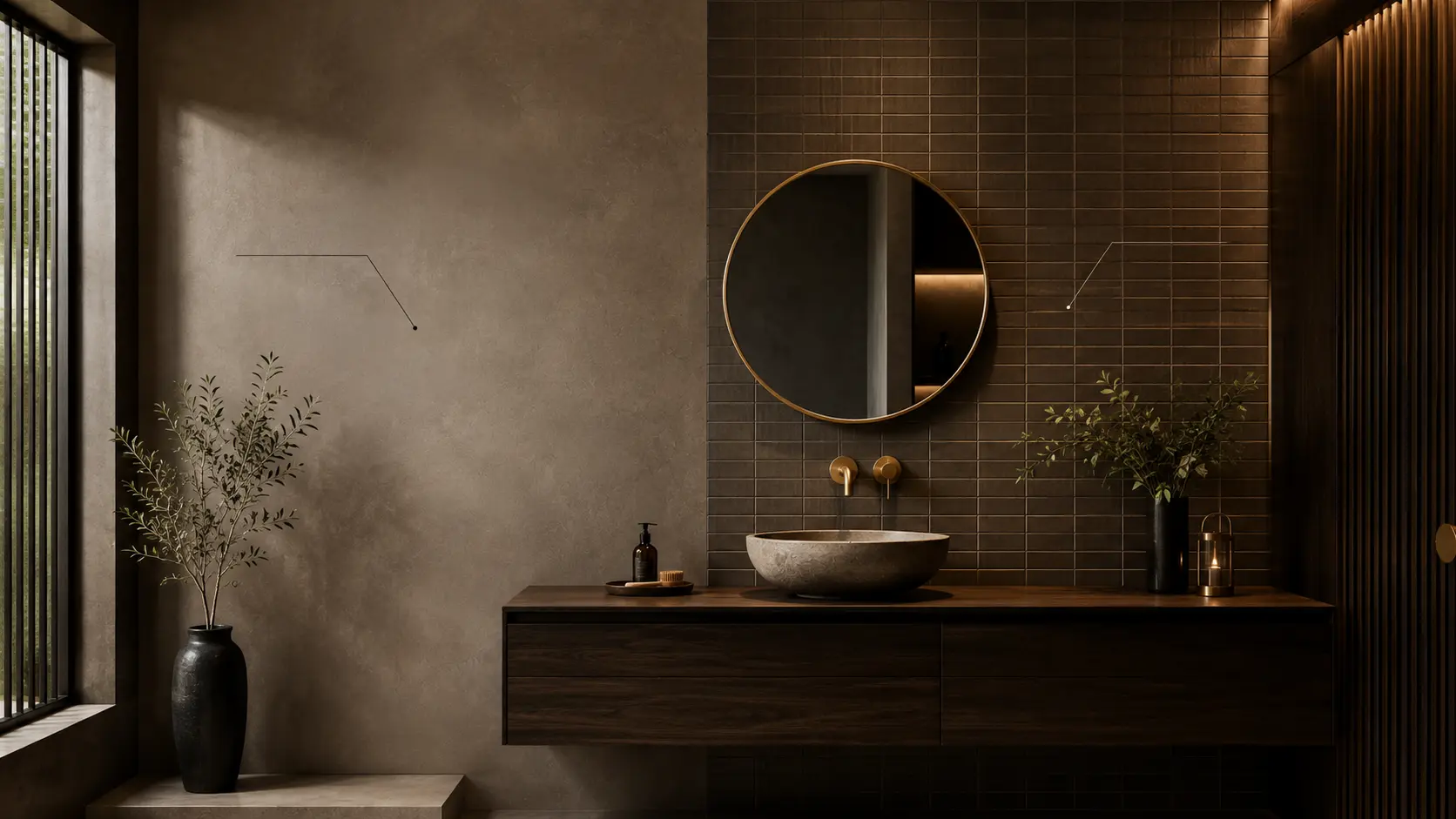
Microcement vs Tile - Which Belongs in Your Shower and Bathroom
Tile has been the default for wet areas for decades, and for good reason. Microcement offers a newer, seamless alternative that is changing how bathrooms and showers look. Neither is automatically right - it depends on whether you want the proven grid of tile or the continuous, jointless surface of microcement. Here is the honest comparison for an Orange County wet area.
The Short Answer
If you want a seamless, continuous, modern wet area with no grout lines - no dark joints to scrub, no grout to re-seal - and you want it applied as a proper waterproof system, microcement is the answer. If you want a proven, familiar surface, a specific tile look, or the ability to swap a single damaged piece, tile is the honest choice - and there is nothing wrong with it. The difference comes down to seams.
The Real Difference Is the Seams
This is the whole comparison in one word: grout. Tile is a grid of pieces held together by grout lines, and those lines are where the maintenance lives - grout stains, absorbs, and over years can harbor mildew, so it needs cleaning and periodic re-sealing. Microcement is applied as one continuous surface with no joints at all, so there is nothing to trap dirt or grow mildew along a seam. If the grout lines in your current bathroom are what bother you, that feeling is the reason microcement exists.
Waterproofing - Both Need It Done Right
Neither finish is waterproof by magic. Tile relies on the membrane and grout behind and between it; when tile leaks, it is almost always the grout or the substrate, not the tile itself. Microcement in a wet area is built as a system - a waterproof membrane, a properly prepared substrate, the microcement coats, and a sealer - and when that system is right, the seamless surface has no joints to fail. The honest point is the same for both: the waterproofing is in the preparation, not the surface, which is why wet-area work should never be treated as a quick coating.
Look and Feel
Tile gives you a defined grid, a huge range of colors, patterns and sizes, and a classic, crisp look - from subway tile to large-format stone-look porcelain. Microcementgives you a continuous, monolithic, contemporary surface with subtle movement and a soft matte-to-satin finish - closer to polished concrete than to a tiled wall. It is the difference between a composed pattern and a single quiet material. Neither is "better"; they are different aesthetics, and the room's style should decide.
Cleaning and Maintenance
This is where seamless earns its keep day to day. A microcement shower wall is wiped as one continuous surface - no grout lines to scrub, no joints to re-seal - and a sealed microcement floor handles daily wet use. Tile is easy to wipe on the face, but the grout is the ongoing job: keeping it clean, and re-sealing it over time. If low-maintenance is high on your list for a wet room, that points to microcement; if you do not mind grout upkeep and like the tile look, tile is perfectly fine.
Repair - One Honest Point for Tile
Here tile has a genuine advantage worth stating plainly. If a single tile cracks, you can often replace that one piece. A microcement surface is continuous, so a repair is a hand-worked patch and re-seal of an area rather than swapping a part - done well it blends, but it is a different kind of fix. If you want the reassurance of piece-by-piece repairability, that is a real point for tile, and we will say so.
Cost
Both a quality tile installation and a microcement wet-area system are skilled work, and neither is the cheapest option in a bathroom. Tile cost swings widely with the tile itself and the complexity of the layout; microcement is priced for the system and the hand application. Rather than a number here, the right figure comes from the specific room - its size, its prep, and how the waterproofing has to be built. A site visit turns it into a written estimate.
Microcement vs Tile FAQs
Yes - applied as a full waterproof system (membrane, prepared substrate, microcement coats and sealer), microcement is built for showers and wet floors. The seamless surface has no grout joints to fail, which is a large part of its appeal in a wet area.
Both depend on the waterproofing behind and within them, not on the surface alone. Microcement's advantage is that a correctly built continuous surface has no grout seams to leak or mildew; tile relies on its grout and membrane, which are the usual points of failure.
A correctly applied microcement system over a stable, prepared substrate resists cracking, and because it is seamless there is no grout to stain or fail. Preparation is what prevents problems, which is why wet-area work is treated as a system, not a coating.
Microcement, for most people, because there are no grout lines to scrub or re-seal - it wipes as one continuous surface. Tile is easy to wipe on the face but the grout is an ongoing upkeep job.
It is repaired as a hand-worked patch and re-seal of the area rather than by swapping a piece. Done well it blends into the continuous surface. If piece-by-piece repairability matters most to you, that is a genuine point in favor of tile.
So Which Is Right for Your Wet Area?
Choose microcement if the seamless, grout-free, modern look is what you want and low day-to-day maintenance matters - applied as a full waterproof system, it is built for showers and wet floors. Choose tile if you want a specific tile aesthetic, the proven familiarity, or piece-by-piece repairability, and you do not mind grout upkeep. For a shower, both can work when done right - the deciding question is almost always: do the seams bother you, or not?
An estimate is a conversation about fit, not a commitment - if tile is the smarter choice for your wet area, we will say so.