
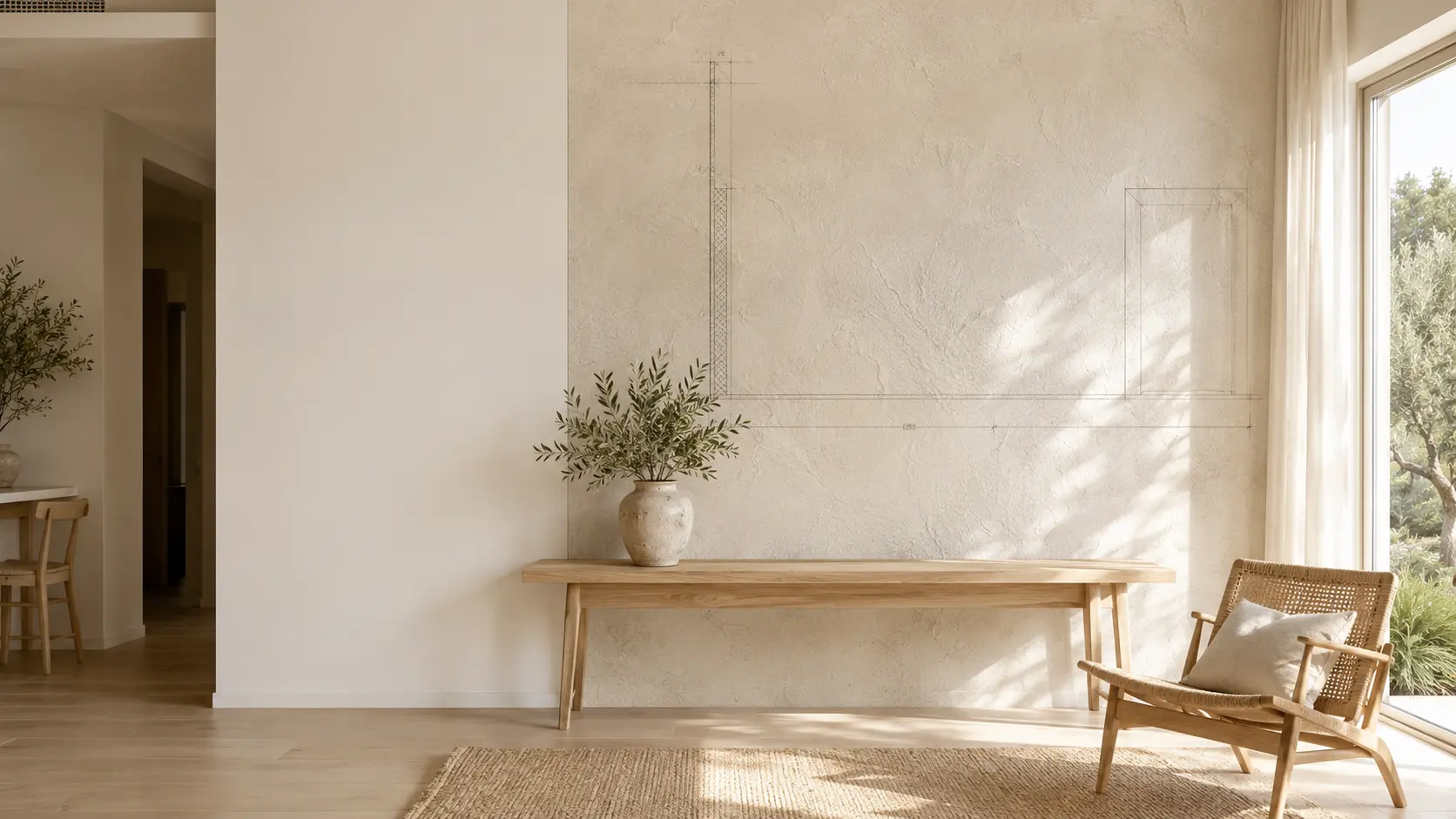
Decorative Plaster vs Paint - When Each One Is the Right Call
Paint and plaster are not rivals so much as different answers to different questions. Paint is fast, affordable and endlessly re-colorable. Hand-applied plaster is a solid mineral surface with depth, light and texture that paint cannot imitate - at a higher cost. This is an honest look at when each one is the right choice for an Orange County home.
The Honest Short Answer
If you want a clean, flat, affordable wall in a color you may change in a few years, paint is the right call - and we will tell you so. If you want a wall that reads as a solid, hand-worked material - with depth, movement and the way real plaster catches light - and you want it to last, decorative plaster earns its cost. The rest of this page is how to tell which situation you are in.
What Paint Does Well
Paint is honestly the better answer in a lot of rooms. It is the most affordable finish, it goes on fast, it comes in any color, and it is easy to change when you redecorate. For rental units, kids' rooms, quick refreshes, ceilings, and any wall where a clean flat color is exactly what you want, paint is not a compromise - it is the right tool. A studio that only ever says "plaster" is selling, not advising.
What Decorative Plaster Does That Paint Cannot
Plaster is a solid mineral surface, not a colored film over drywall. That difference shows up three ways. Depth: layered plaster has real dimension - it is not flat, it moves as you move past it. Light: polished and metallic finishes catch and return light, so the wall changes through the day; a matte lime wash softens and absorbs it. Texture:you can feel that it is a material. Paint, even a good "limewash-effect" paint from a hardware store, is a flat print of these qualities - it cannot do the real thing, because the real thing is depth you can see into, not a pattern on the surface.
Where Plaster Is Worth the Cost - and Where It Isn't
Plaster earns its cost on the walls you actually look at: a living-room feature wall, a fireplace, an entry, a stair hall, a powder room - the surfaces that set the tone of a home. It is not worth it to wrap every wall of every room in plaster; that is where paint belongs, and where plaster starts to feel heavy. The luxury move is restraint: plaster on the one or two walls that carry the room, paint on the rest. We will help you draw that line rather than plaster everything.
The "Limewash Paint" Confusion
This one traps a lot of buyers. Hardware stores sell limewash-effect paint - a paint designed to mimic the look of real lime wash. It is paint. Real lime wash is a breathable mineral finish that moves, patinas and ages like the natural material it is. If you searched "limewash walls" and landed on a can of paint, you are not comparing like with like. Both have a place - the paint is cheaper and more uniform; the real finish has depth and life - but you should know which one you are buying.
Cost - the Real Difference
There is no way around it: paint costs less per square foot than hand-applied plaster, often by a wide margin. Plaster costs more because it is a material applied by hand in multiple coats by a specialist, not rolled on in an afternoon. What you are paying for is the depth, the durability and the surface that reads as real. Whether that is worth it depends entirely on the wall and how much it matters to the room. For the walls that set the tone, most of our clients find it is; for the walls nobody looks at, we point them back to paint.
Durability and Maintenance
Good paint lasts years and repaints easily; that ease of change is part of its appeal. Sealed plaster is built to last longer and to age as a material rather than to fade as a coat - a lime wash patinas, a polished plaster holds its depth, a microcement surface stands up to wet and high-traffic use. Neither is "no maintenance," but they age differently: paint you refresh, plaster you maintain. If you want a wall you will re-color often, that is a point for paint; if you want a surface that settles in and gets better, that is a point for plaster.
Decorative Plaster vs Paint FAQs
No. Paint is a colored film over drywall; decorative plaster is a solid mineral surface applied by hand in coats, with real depth, texture and the way it catches light. They look different in person because they are different materials, not different price tiers of the same thing.
No. Limewash-effect paint is paint made to mimic the look; real lime wash is a breathable mineral finish that moves and patinas over time. The paint is cheaper and more uniform; the real finish has depth and ages like natural material.
Usually not. Plaster earns its cost on the walls that set the tone - a feature wall, a fireplace, an entry - with paint on the rest. Wrapping every wall in plaster costs more and often feels heavy; restraint reads as the more considered choice.
When you want a clean flat color, a budget-friendly finish, a wall you may re-color soon, or a room like a rental or a ceiling where a solid color is exactly right. In those cases paint is not a compromise - it is the correct tool, and we will tell you so.
Sealed plaster is built to last and to age as a material rather than fade as a coat, so on the walls it suits it typically outlasts paint. Paint's advantage is the opposite - it is easy and cheap to change when you want a new look.
So Which Should You Choose?
Ask what the wall is for. A wall that just needs to be a clean color, in a room you may redo in a few years, on a budget - paint. A wall that should feel like a material, set the tone of the room, and last - plaster, on that wall, with paint carrying the rest of the space. Most homes are a mix, and that mix is the right answer. If plaster is wrong for what you are trying to do, we will say so before you spend a dollar on it.
An estimate is a conversation about fit, not a commitment - if paint is the smarter choice for your wall, we will say so.