
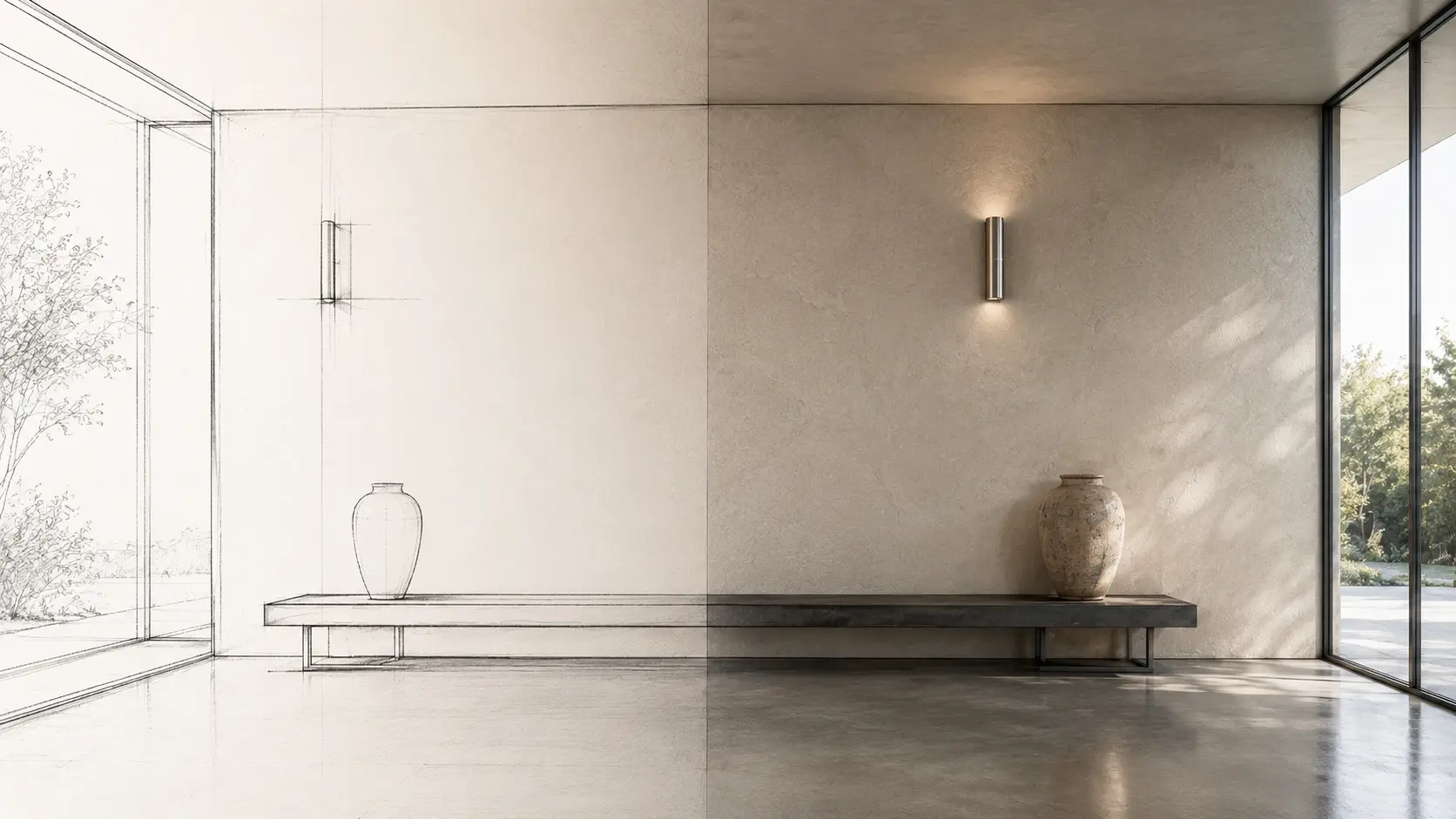
Microcement vs Venetian Plaster - Which Seamless Finish Fits Your Room
Both give a wall a continuous, hand-worked surface with real depth - but they are not interchangeable. One is a modern, matte, water-tough system; the other is a classic, luminous, polished mineral finish. Here is how to choose between them, room by room, for an Orange County home.
The Short Answer
If the room gets wet - a shower, a wet floor, a splash-heavy bathroom - the answer is microcement, applied as a full waterproof system. If you want soft, luminous, polished depth on a dry feature wall, a fireplace or a stair hall, the answer is Venetian plaster. Most homes end up using each where it belongs. The rest of this page is why.
What They Have in Common
Both are hand-applied mineral finishes, built in thin coats and worked by hand, and both give a seamless surface without the grout lines and repetition of tile or panel. Both read as a solid material rather than a coat of paint, and both are chosen and confirmed on a hand-applied sample in your room's own light before any full application. That shared DNA is why they get compared - and why the differences below matter more than they first appear.
Where They Differ - Look and Feel
Microcement reads modern and quiet: a matte-to-soft-sheen, tight, continuous surface with subtle cloud and movement, closer to polished concrete than to marble. Venetian plaster reads classic and luminous: layered, polished, with a marble-like depth that catches and returns light, so the same wall shifts through the day. If your room is contemporary and calm, microcement usually fits; if you want warmth, sheen and old-world depth, Venetian usually wins.
Where They Differ - Wet Areas
This is the decisive split. Microcement is built for wet areas - showers, tub surrounds, wet floors - because it bonds tightly (even over existing tile) and takes a waterproof seal as part of a membraned system. Venetian plaster is not a wet-area finish. It belongs on dry walls; put it in a shower and it will not last. For any continuous water exposure, the honest answer is microcement, and we will say so.
Where They Differ - Durability and Maintenance
Both are durable when applied correctly and sealed, and both are cleaned with a soft, damp cloth and a pH-neutral cleaner. Microcement, sealed, stands up to daily wet-area use and high-traffic floors. Venetian plaster is built for walls rather than floors or wet zones; on the surfaces it suits, it ages gracefully and can be refreshed by hand. Neither is a finish you tear out - both can be maintained and re-sealed.
Which One by Room
- Bathroom, shower, wet floor-> Microcement (waterproof system).
- Living-room or bedroom feature wall, dry-> Venetian plaster for luminous depth, or microcement for a calm modern surface - your look decides.
- Fireplace surround (dry)-> Venetian plaster for warmth and sheen; microcement for a concrete-quiet look.
- Stair hall, entry-> Venetian plaster where you want light-catching depth.
- Kitchen floor, high-traffic floor-> Microcement.
The pattern: wet or heavy-use surfaces lean microcement; dry walls where you want depth and light lean Venetian.
What Each One Costs
Both are priced per square foot, and the range depends on surface prep, coat count, ceiling height, access and complexity - with wet-area microcement sitting higher than dry work. Rather than repeat numbers here, see the detailed ranges on the microcement cost and Venetian plaster cost pages, then let a site visit turn it into a written estimate.
Microcement vs Venetian Plaster FAQs
Yes, and they often do - microcement in the wet rooms and on floors, Venetian plaster on dry feature walls, fireplaces and stair halls. Using each where it belongs is the norm, not the exception.
Microcement, applied as a waterproof system. Venetian plaster is not built for continuous water exposure, so for a shower or wet floor microcement is the right choice.
They are different luxuries. Venetian plaster gives luminous, marble-like depth that catches light; microcement gives a calm, modern, concrete-quiet surface. The "better" look depends entirely on the room and the style you want.
Both last for years when applied correctly and sealed. The real question is fit: microcement lasts in wet and high-traffic areas where Venetian plaster should not go, and Venetian plaster lasts beautifully on the dry walls it is made for.
On a hand-applied sample of each, on your own wall, in your room's light - never from a screen. We recommend the finish that suits the space and use, and confirm the final look on-site before committing.
Still Not Sure? We Will Tell You Which
The best way to choose is not a web page - it is a hand-applied sample of each finish on your own wall, in your own light. Tell us the room and how it is used, and we will recommend the finish that fits, bring samples, and turn it into a written estimate. If one finish is clearly wrong for your space, we will say so before any work starts.
An estimate is a conversation about fit, not a commitment - if a finish is not right for your room, we will tell you.